Introduction
The SFMTA does a lot of work to make biking and rolling to school safer and easier. As part of this, we have been connecting schools to the city's biking and rolling network. We are excited to try new things in this area, and to update our efforts. This work is called Safe School Connections. Working closely with community members, we plan to:
- Partner more effectively with school communities by unifying our efforts
- Identify the best paths to link schools to the biking and rolling network
- Plan and build connections using a proven toolkit of options
Making school trips safer together:
Community feedback inspired Safe School Connections. And we want to make sure community voices shape the work every step of the way.
We encourage you to learn:
- Our goal
- The challenge: School connections today
- The starting point: Community feedback
- How we will do the work
- How we will approach implementation
- How we will measure success
- What to expect: Program timeline
- Who helped: Community partners
- How to get involved
Our goal
Safe School Connections aims to establish a safe and accessible connection from all 249 schools* in San Francisco to the biking and rolling network. This network is for people of all ages and abilities**.
*Schools include all SFUSD schools and private schools that serve kindergarten through high school.
**All Ages and Abilities Network includes: Separated bikeways, Slow Streets, non-separated bikeways with traffic calming.
Connecting all schools to the biking and rolling network is a long-term goal. It could take up to 10 years to implement. And, it will require finding more financial and staff resources. That’s why we’re breaking down the work into manageable pieces. Our initial focus will be on:
- Connecting schools that are within a block of the existing network
- Connecting schools that are within a block of the potential network
Safe School Connections is one of many SFMTA efforts to:
- Improve school safety
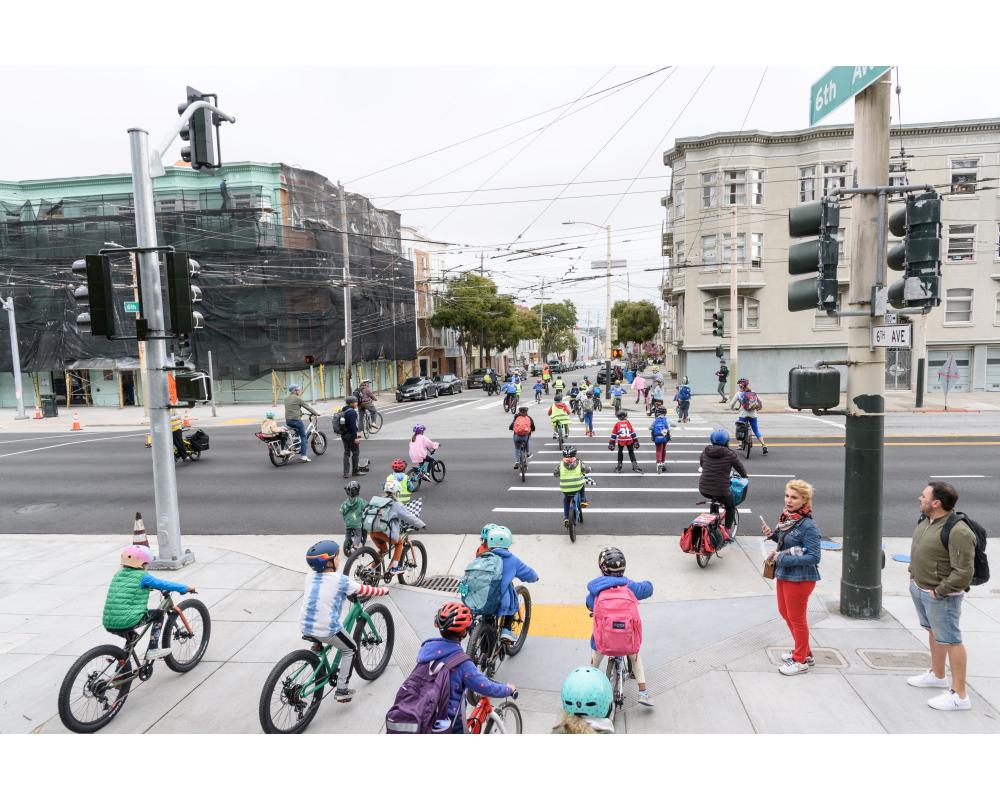
- Support active trips to school, helping youth bike, roll and walk to class
- Provide families with practical travel options
We do this work because there are proven mental and physical health benefits to increasing biking and rolling trips for youth:
- Active trips to school help students get regular exercise.
- Students who are empowered to navigate streets develop confidence, independence and autonomy. They learn how to use the transportation system and how to be safe and considerate of others on the street.
- More active trips add people and life to streets. This offers more opportunities for social interaction and helps build community.
- When kids can travel actively and independently, San Francisco becomes more livable for families.
The challenge: School connections today
We mapped each of the 249 schools in San Francisco to understand how well they connect to the:
- Existing All Ages and Abilities biking and rolling network
- See page 25 of the Biking and Rolling Plan
- Potential All Ages and Abilities biking and rolling network
- See page 68 of the Biking and Rolling Plan
The problem: As shown in the map below, just 37 schools (~15%) are connected to the current network as of July 2026. Another 57 schools (23%) are connected to the potential network.

We are using a three-pronged strategy to increase school connections:
1. Connect schools that are within one block of the current All Ages and Abilities network.
- We aim to prioritize closing these gaps first since these schools are already close to the network.
2. Connect schools that are within one block of the potential All Ages and Abilities Network.
- When we implement the All Ages and Abilities network near these schools, we aim to be ready to deliver these connections at the same time.
3. Identify the best way to create connections for the remaining 73 schools.
- These schools are also important to connect but may take longer to plan and implement.

This work is a direct response to community feedback. In March 2025, SFMTA staff presented the San Francisco Biking and Rolling Plan to our Board for approval. Making school trips safer was one of our top priorities in this new plan for biking and rolling. Community members shared the same priority, asking us to go further with a specific plan for school connections. Our Board agreed and asked us to move forward with this work.
Safe School Connections is aligned with and advances several city efforts. They include recent street safety policy directives by the Board of Supervisors and the Mayor’s Office. They also include long-standing San Francisco policy initiatives.
- Mayor’s Office Street Safety Executive Directive (2025)
- Board of Supervisors’ San Francisco Street Safety Act (2025)
How we will do the work
Our approach to this work includes three parts:
1. Partner more effectively with school communities by unifying our efforts
- We created a new Schools Coordination Program. It brings together school planning, communication and investments under one program. This way, we can be even more effective as we learn and meet community needs.
2. Identify the best paths to link schools to the biking and rolling network
- We are maximizing our chances to learn which paths are best for school connections. From programs to events, we're working to hear how communities use streets near schools.
3. Plan and build connections using a proven toolkit of options
- We will partner with communities to design school connections. Options could include a mix of infrastructure, education and programming.
1. Partner more effectively with school communities by unifying our efforts
Over the years, our work with schools has grown across many programs and projects. Safety and access are top priorities in our work with school communities. We advance both through a range of programs:
| Capital Improvements | Education, Encouragement and Community Support | Muni Support |
|---|---|---|
| Daylighting and Safety Zone Program | Safe Routes to School Program | Free Muni for Youth |
| Speed Management Strategies - speed limit signs, speed safety cameras, traffic calming program (including Walk Audits) | School Crossing Guard Program | Muni Ambassadors |
| Bike and pedestrian capital projects and planning | School Peak Service and School Tripper Service | |
| Response to school related requests |
As an agency, we are thinking about this work more holistically. We have created a new Schools Coordination Program to support it. With this program, we will unify our efforts across school-focused programs. That will help us:
- Partner even more effectively with school communities
- Build on what we've learned
- Identify new opportunities
- Deliver services more efficiently
Our Schools Coordination Program will:
- Act as the main point of contact between the SFMTA and school administrations across the city
- Connect and organize all school-related work within the SFMTA
- Ensure SFMTA leadership is informed of school-related work and able to prioritize improvements as needed
- Build stronger relationships with school communities
We are maximizing our chances to learn which paths are best for school connections. The SFMTA’s existing programs and projects deliver important street safety improvements across the city. We have found ways to adapt these efforts to better support Safe School Connections. We are coordinating with our teams to identify possible school connections as part of their work. Examples include:
- School Walk Audits. Each year, the SFMTA completes walk audits at ten SFUSD schools. These audits identify opportunities to improve safety for people walking or biking on streets around the school. We do this in partnership with school administrators, teachers, parents, students and the larger school community. Beginning with the 2026-27 school year, the Walk Audit Program will specifically identify connections for those biking and rolling to school.
- Youth Transportation Advisory Board. This SFMTA group helps youth build personal and professional skills within the agency. This includes a variety of hands-on planning and engagement opportunities. Beginning in the 2026-2027 school year, Youth Transportation Advisory Board members will be part of the Safe School Connections planning process. Under the guidance of SFMTA staff, members will perform work to better understand issues and the culture around biking and rolling to school. They will speak with school populations to help identify connections and improvements at select schools.
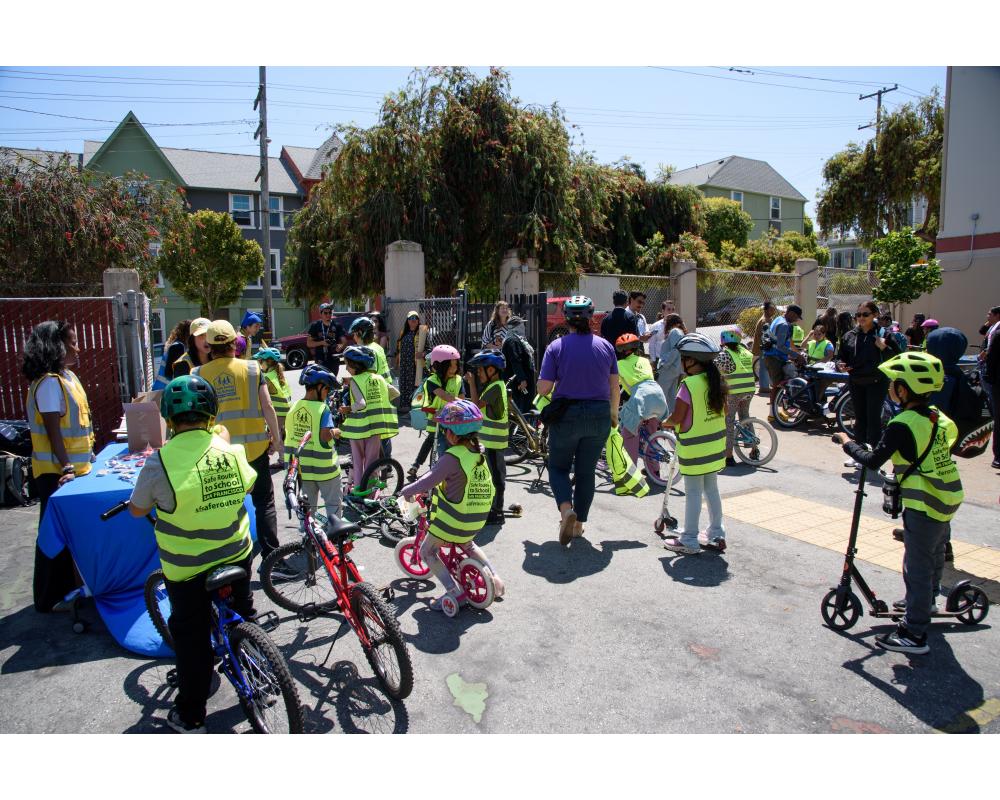
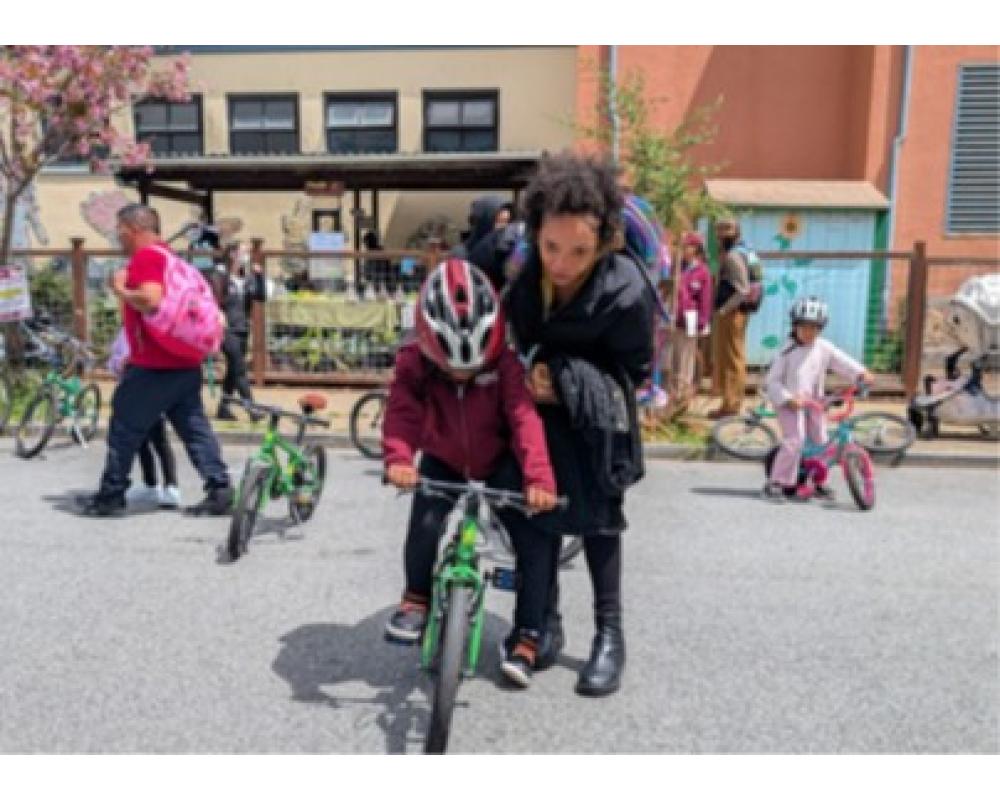
- School events. In 2026, the San Francisco Bicycle Coalition and Civic Joy Foundation organized School Street events. These events temporarily close down one block of a street next to a school. This changes the use of the street for play and community building on a weekday afternoon. Up to six School Street events are planned during the 2026-2027 school year. SFMTA staff will join these events at schools we have prioritized to identify possible connections. At these events, we will speak with school communities about better connections for biking and rolling.
- SFMTA and other city agency capital projects. We will identify opportunities to incorporate school connections into existing capital projects where feasible.
3. Plan and build connections using a proven toolkit of options
The first step of Safe School Connections focuses on coordinating our school-related work. Then, we will focus on where to build school connections. The next step is to plan improvements to the streets.
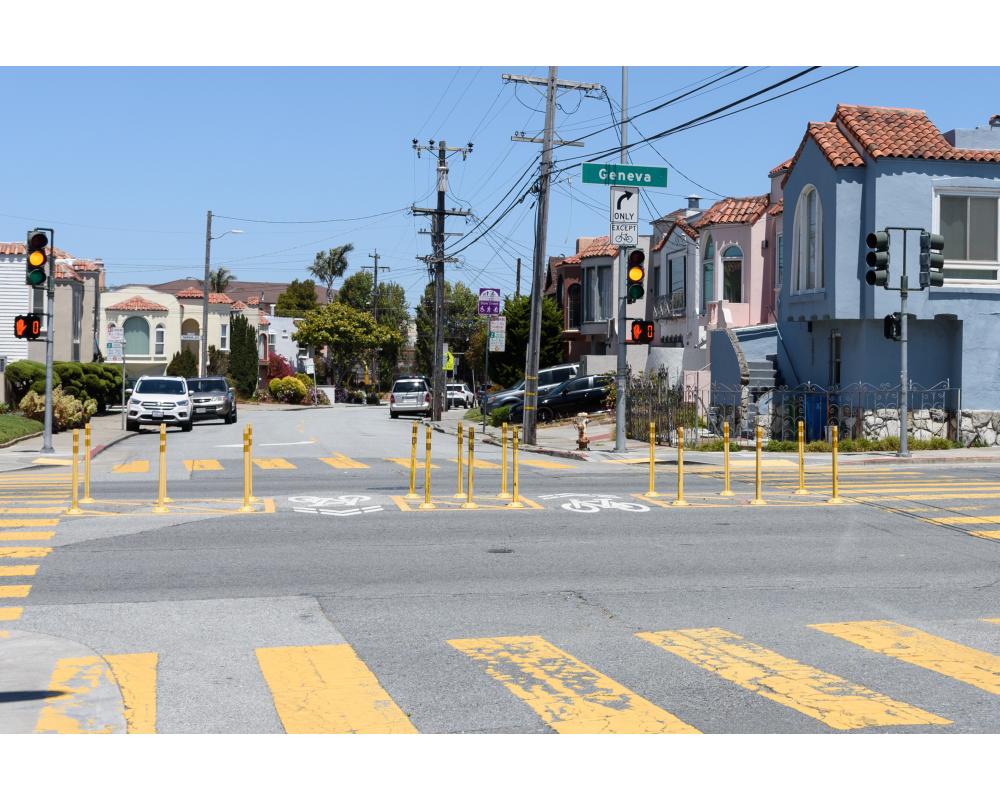
School Connector streets will be the connection between schools and the larger biking and rolling network. With community input, we’ll design street improvements from a toolkit of options. This toolkit includes infrastructure, education and programming possibilities.
The design of School Connector streets will be based on two key factors. We will consider an individual street’s technical constraints and the needs of the surrounding community.
School Connectors streets will combine physical safety improvements with community building efforts. Physical improvements will create safer conditions on the street for those biking and rolling. Community building efforts will promote the increased presence of youth, families and school populations on these streets. Trips to school get safer and easier, and they also strengthen communities.
Physical infrastructure toolkit
Biking and rolling infrastructure
These treatments help improve safety for those biking and rolling.
They include:
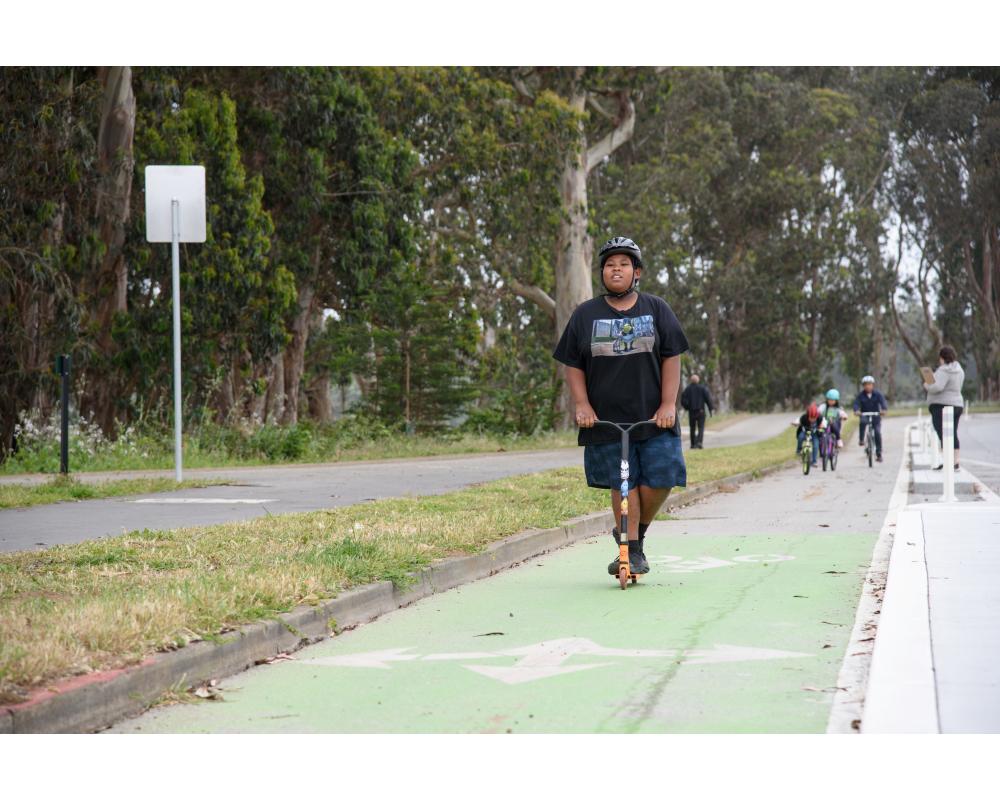
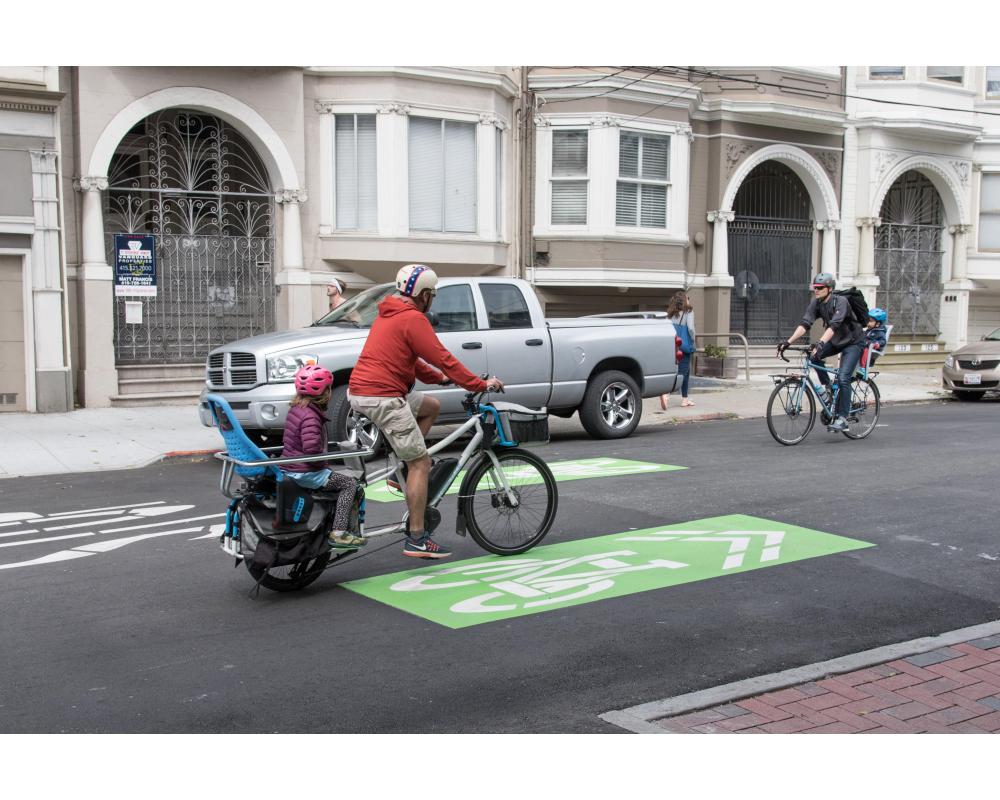
- Separated bike lanes
- Traffic circles
- Traffic diverters
- Speed humps/tables
- Signage
- Painted markings
- School Street activations
Traffic calming and safety upgrades for people walking
These improvements help slow speeds and improve safety for people walking. This also provides better conditions for those biking and rolling.
They include:
- Corner bulbouts
- Raised crosswalks
- Painted safety zones
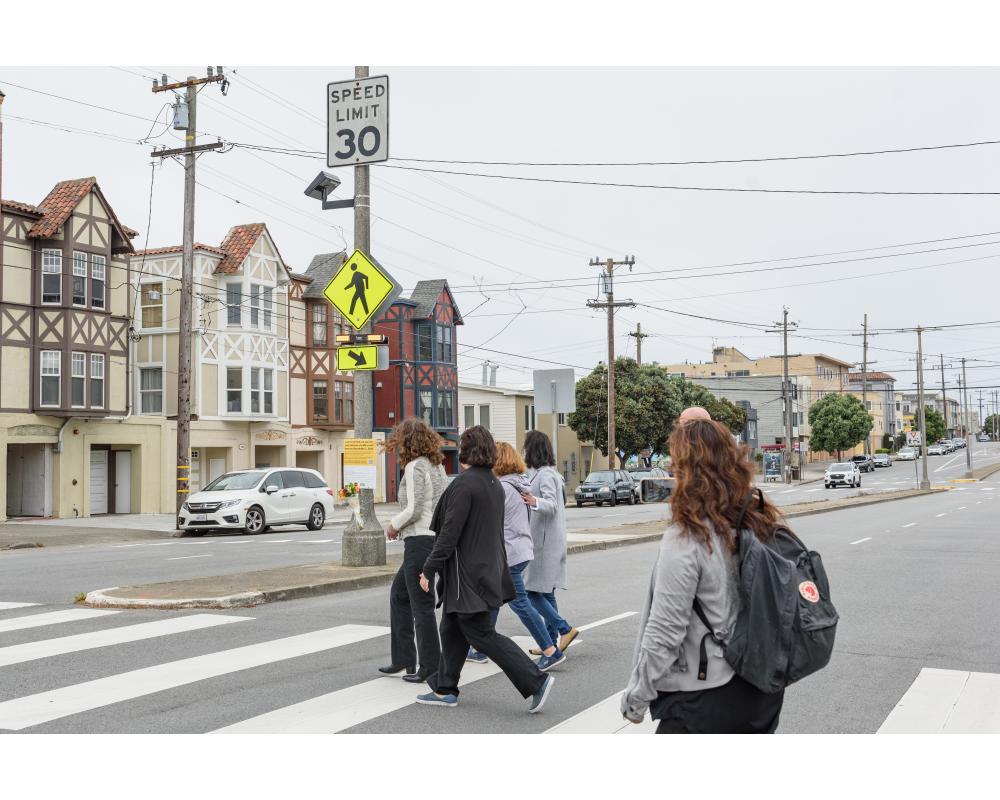
- Rectangular rapid flashing beacons
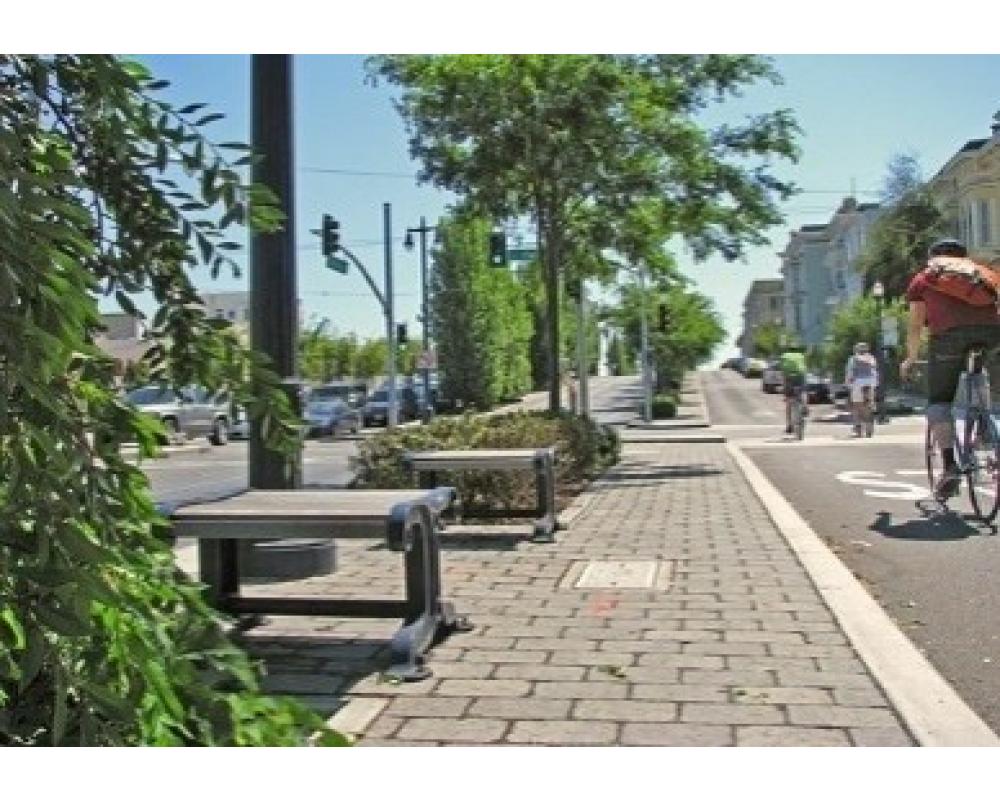
Placemaking elements
These treatments make streets more inviting for people to connect with each other. They also signal to look out for people gathering. These elements typically require partnership with community organizations or other city agencies to fund and maintain.
They include:
- Gathering spaces
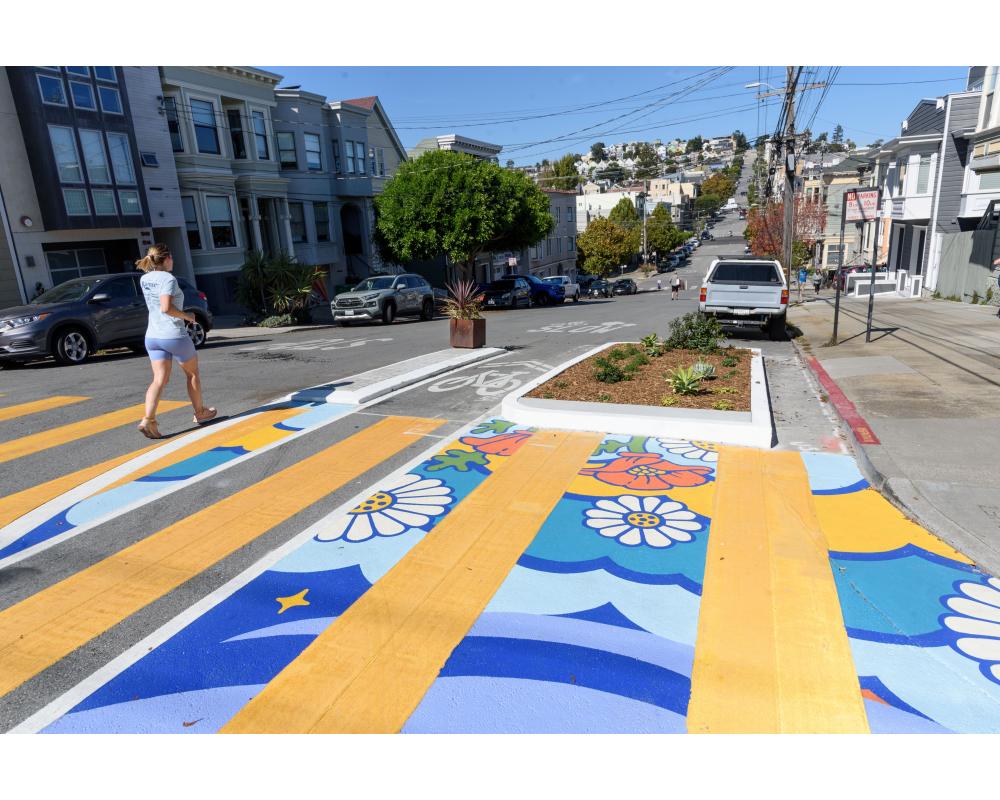
- Decorative streetscapes
- Seating
- Nature/garden spaces
Community building, education and encouragement toolkit
Community building is key to the success of School Connector streets. These streets are school connections where youth, families and school communities travel. It is important to socialize this by working collaboratively with school communities. Community-driven efforts to promote education, encouragement and collaboration will increase awareness of School Connector streets.
For examples, see our School Connections Toolkit gallery.
How we will approach implementation
Funding
Planning, design and implementation of school connections can be funded through different methods. They could include:
- The SFMTA’s Fiscal Year 2027-2031 Capital Improvement Program’s Streets Program. It includes funding that can potentially be used to implement items from the physical infrastructure toolkit. This would apply to prioritized school connector streets.
- The SFMTA’s existing Safe Routes to School program. It includes some funding that can provide school programming, education and community building efforts. This would apply to SFUSD schools along School Connector Streets.
- Local, state and federal grants. They are also potential future sources of funding.
Prioritization
Resources for this work are limited. We will need to make decisions on how we prioritize projects. We will develop and maintain a list of potential connections in need of planning, design and implementation.
We will begin by identifying potential connections at some of the:
- Schools within a block of the existing All Ages and Abilities Network or
- Schools within a block of the potential All Ages and Abilities Network that may be implemented in the next five years.
We will focus our work here because these locations are already so close to the network. They represent projects that can make a big difference with limited resources. In the coming year, we will identify potential connections at some of these schools. This work will follow our process described in step 2 of our strategy: Identify the best paths to link schools to the biking and rolling network.
From there, we will apply criteria to prioritize where work will take place. We will use it to advance school connections from planning to implementation. Example criteria include:
- Community readiness. Communities may have longstanding issues that they see as a higher priority than Safe School Connections work. This could be issues around sidewalk quality for seniors. Or, it could relate to creating more opportunities for youth. Community readiness involves ensuring that these community issues are being addressed as we pursue this work.
- Project integration opportunity. In an ideal situation, we would pursue connections where there is already a project that adds improvements nearby. This is part of our work to drive efficiencies across the SFMTA and other city agencies.
- Located on the High Injury Network. Streets on the High Injury Network are where the most severe and fatal traffic injuries occur.
- Fulfills priorities from “Community Action Plans.” Community Action Plans are an important part of the Biking and Rolling Plan. Their goal is to ensure that biking and rolling improvements reflect local priorities rather than a one-size-fits-all approach. Development of these plans was led by community members in neighborhoods that have experienced:
- historic disinvestment
- transportation inequities
- community harms
- Benefits a Focus School within the Safe Routes to School Program. These SFUSD schools receive extra attention and support through this program. This is based on a data-driven prioritization process. Schools are prioritized using factors such as:
- Potential to reduce family vehicle trips
- Pedestrian-involved collision history near the school
- A range of equity and socioeconomic data points to understand which schools need additional resources
In 2027, we plan to identify the first potential connections. From there, we would produce a more detailed implementation roadmap.
How we will measure success
The main objective of Safe School Connections is to build connections from each school* in San Francisco to the All Ages and Abilities biking and rolling network.
Key results that indicate success of this program include:
- Increasing active trips to schools, which include biking, rolling, walking and transit
- Increasing the number of schools that are connected to the existing All Ages and Abilities network. There is particular focus for schools that are:
- Along the High Injury Network. These streets experience the most serious traffic collisions.
- In Equity Priority Communities. These areas are designated as having populations with lower income levels, higher proportions of non-white ethnic groups and seniors.
- Closing gaps in the citywide biking and rolling network
We also aim to meet these related goals through Safe School Connections work:
- Build stronger relationships with school communities (school staff, teachers, parents, students, neighbors)
- Better socialize the presence of school-aged children and families on streets near schools.
- Improve perceptions of safety and accessibility on school streets where school communities walk, bike and roll.
Advancing the Biking and Rolling Plan’s Equity Goals
Through Safe School Connections work, we seek to advance the equity policies from the SFMTA’s 2025 Biking and Rolling Plan. We also aim to uphold the recommendations and priorities laid out in the Community Action Plans. These policies focus on:
- Community planning
- Project co-creation
- Removing barriers
- Community health
What to expect: Program timeline
September
- Public outreach period on draft Safe School Connections approach
October/November
- Refine approach based on public feedback
Late 2026/Early 2027
- Present final approach for approval at SFMTA Board of Directors meeting
Throughout 2027
- Identify first potential School Connectors
- Advance implementation strategy. Fund initial set of School Connector project planning/design/implementation
- See How we approach implementation section above
Who helped: Community partners
We want to thank the many groups who met with us early on to discuss Safe School Connections.
Biking and Rolling Plan Community Action Plan Partners
- New Community Leadership Foundation
- PODER
- South of Market Community Action Network
- Tenderloin Community Benefit District
Street safety organizations
- SEIU School Crossing Guard Representative
- SF Bike Coalition
- Streets For All
- Walk SF
These groups provided valuable input that shaped the approach to this work. We heard:
- Strong support for the SFMTA school coordination focus
- Interest in scaling up Safe School Connections as quickly as possible to identify connections
- Emphasis on recognizing broader community needs and context in school connections work
- Interest in providing more opportunities for crossing guard staff
- Ensuring that resources are not taken from existing programs to fulfill this work
One piece of the puzzle
Safe School Connections is focused on identifying and building connections from schools to the biking and rolling network. We recognize that school connections are one piece of the puzzle to increasing biking and rolling trips to school. We also understand that many other factors affect whether someone may make these trips. The graphic below illustrates some of those examples.

How to get involved
Thank you for reading the draft summary of our Safe School Connections program! If you would like to give feedback, please complete this brief survey by Oct. 12, 2026 to share your ideas on this work.
We welcome you to sign up for updates on Safe School Connections.
School Connections Toolkit