Muni’s newest bus yard, the Islais Creek Motor Coach Facility, is rapidly expanding with the exciting influx of new Muni buses. This is the first of two posts in which we’ll take a look at the history of the yard and explain the purpose of the facility and how the neighborhood surrounding the site has changed over time.
The Islais Creek facility represents the first new SFMTA bus maintenance facility in the last 60 years that can accommodate both 40-foot and 60-foot buses. The facility sits on 8.4 acres on the north shore of Islais Creek bordered by Cesar Chavez Street to the north, Indiana Street to the east and the northbound Interstate 280 off ramp to the west.
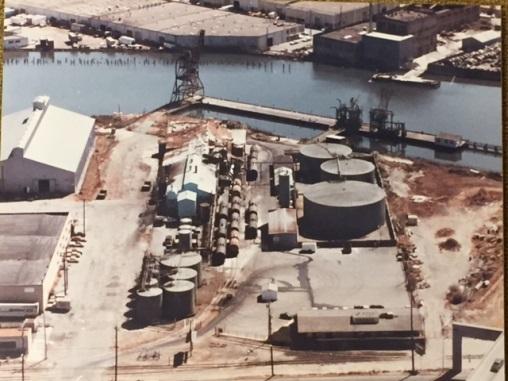
Aerial view of Islais Creek site.
During the 1990s, the SFMTA was looking for a maintenance facility site with easy access to major freeways. The site that once housed a coconut processing mill fit the bill and the idea to construct the Islais Creek bus maintenance and operations facility took hold.
In 2004, the agency also set a goal to reduce its greenhouse gas emissions to 30 percent below 1990 levels by 2014 and become 100 percent emission-free by 2020. In order to reach this goal, the SFMTA created a five year plan to replace their entire fleet of buses. The hybrid buses would replace Muni’s oldest diesel buses, some dating back to 1988. The new hybrids emit 95 percent less particle matter (PM, or soot) and they reduce greenhouse gases by 30 percent. However, in order to store the growing fleet of low floor hybrid buses, the SFMTA needed to move the construction of facility along.
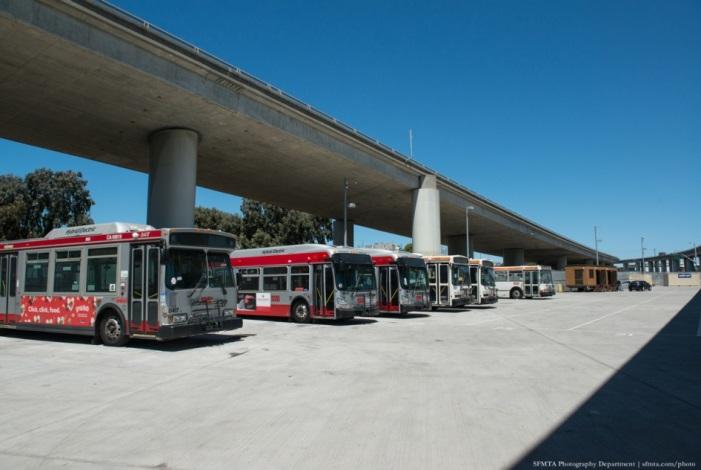
Bus storage under Interstate 280 on ramp
With the assistance of Proposition K sales tax funds from the San Francisco County Transportation Authority, the SFMTA was able to acquire a greater portion of land around the existing site. The funds allowed the agency to begin Phase 1, which consisted of constructing bus parking to accommodate 165 buses and non-revenue vehicles, a fuel and wash station and an interim operations facility. We also implemented improvements along Islais Creek itself, including Shoreline Park – home of the red steel Liberty Ship art installation.
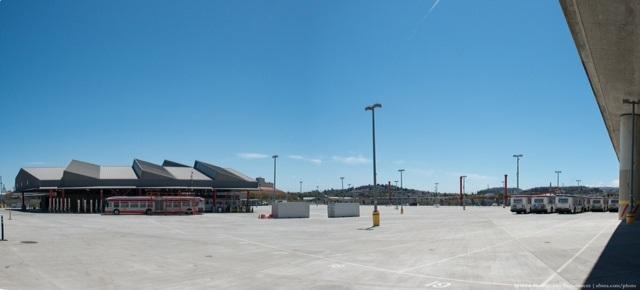
Islais Creek Motor Coach Facility
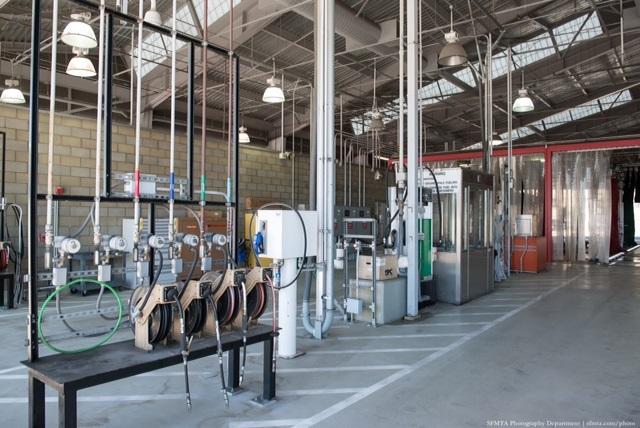
The Fueling Building
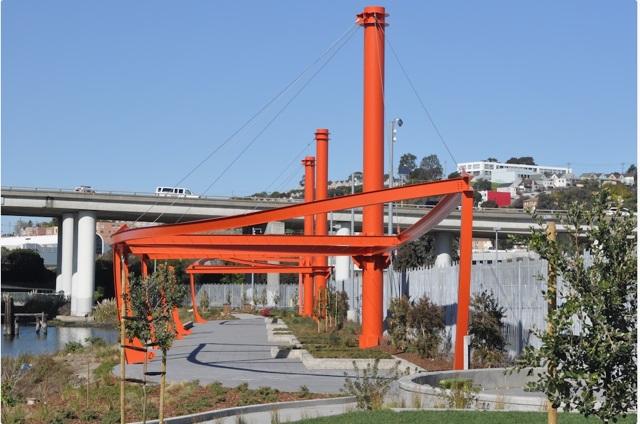
Shoreline Park
Upon completion of Phase 1 in 2013, the SFMTA acquired grants funds from the Federal Transit Administration to build a 65,000 square foot maintenance and operations facility as part of Phase 2.
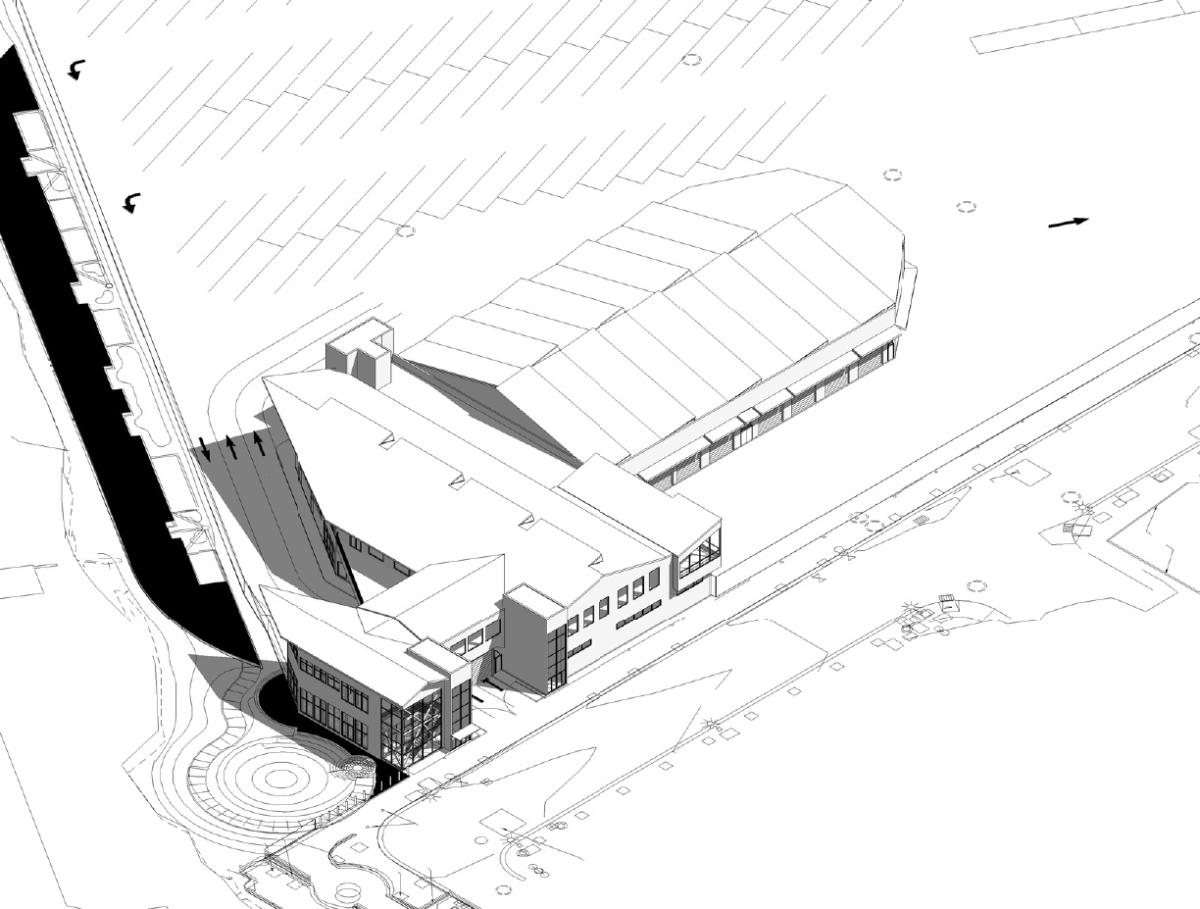
Operations and Maintenance Building
Phase 2 will allow the SFMTA to fuel buses prior to starting their runs, store buses when not in use, service and maintain buses, house administrative personnel, dispatch buses to their beginning routes and provide a community meeting space.
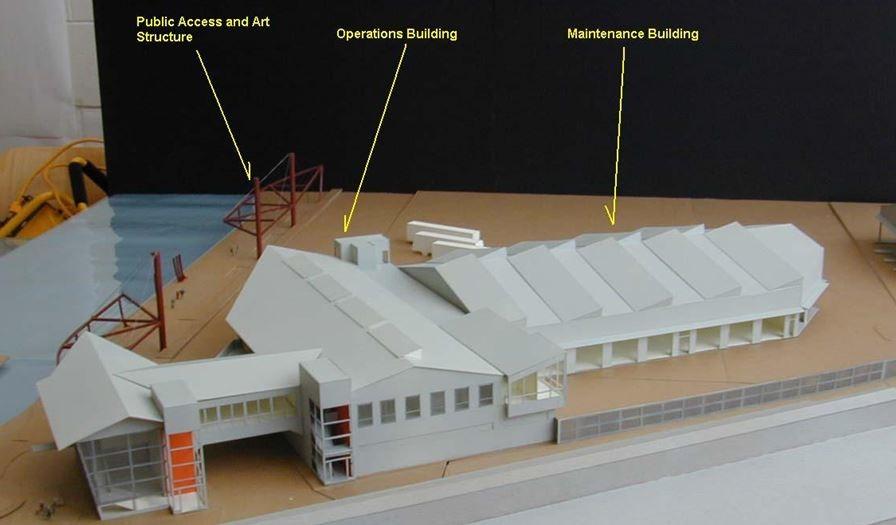
Model of Maintenance and Operations Building
Construction of the maintenance and operations building will begin this fall.
For more information about the Islais Creek Motor Coach Facility Project please, visit the project page.
Stay tuned for the next post on the history surrounding the Islais Creek Motor Coach Facility.
We’ll explore how this once industrial enclave identified as “Butchertown” located in southeastern San Francisco transitioned to become a major producer of “copra meal” or coconut meat and then shift to its current activity of light industrial and mixed use residential development.
Comments are for the English version of this page.