The SFMTA actively monitors weather conditions and prepares for potential impacts to the transportation network. Inclement weather may lead to flooding in San Francisco’s waterfront and low-lying areas that impact streets, traffic and Muni.
Stay Updated, Plan Ahead and Expect Delays
We encourage customers to stay informed and plan ahead when severe weather is forecast. Sign up for Muni Alerts to automatically receive Muni Alerts to your email inbox or phone (SFMTA.com/SignUp). Get the latest alerts via SFMTA.com or by calling 311.
When inclement weather impacts San Francisco, we provide real-time transit updates. We also provide local radio and television stations with updates on the status of Muni service during storms.
When conditions slow traffic, buses and trains are delayed, too. Plan ahead and take an earlier trip to make sure you arrive on time. Be assured that Muni operators are doing everything possible to stay on schedule while maintaining safety.
Transit Service Interruptions
Muni may detour buses on a route-by-route basis when conditions warrant. We post route condition updates to route pages on SFMTA.com and at SFMTA.com/Alerts.
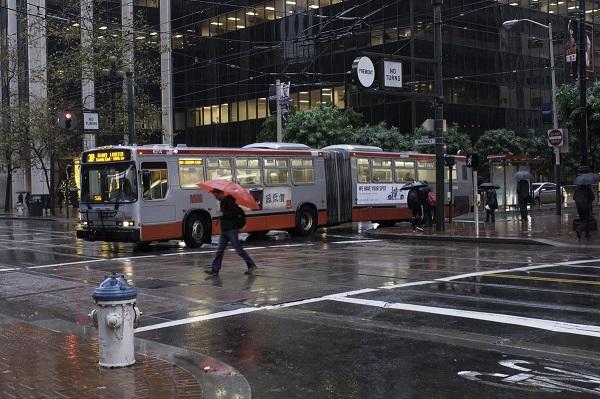
What to Expect in a Storm
What to Expect in a Storm
Severe storms can impact Muni service, streets and transit facilities throughout San Francisco. Heavy rainfall, flooding, high winds and elevated coastal water levels may cause delays, detours or temporary service changes. The SFMTA monitors weather and infrastructure conditions to help keep riders, employees and the public safe.
- Muni delays and detours: Heavy rain, flooding and traffic congestion may slow buses and trains. Routes may be temporarily changed to avoid unsafe conditions.
- Overhead lines: If you see downed overhead wires, please stay away and contact 911. Do not touch the wires or anything in contact with them.
- Street and waterfront closures: High waves, flooding or hazardous conditions may lead to street closures, including along Embarcadero and the Great Highway, and may require traffic and Muni reroutes. When Muni Metro service is disrupted, we may substitute rail service with buses.
- Power outages: Storms may disrupt power and traffic signals, affecting Muni service and traffic flow. Please follow the directions of officials directing traffic during such outages.
- Cable car service: Shuttle buses may replace service. Bus shuttles may need to temporarily replace cable cars as a precaution since debris can impact the cable pulley system.
- Metro station flooding: Flood conditions may prompt the closure of Muni stations. When Muni Metro service is disrupted, we may substitute rail service with buses. Bus shuttles transport commuters between closed stations. In the event of closure, look for emergency signage, or ask a Station Agent, Ambassador or call 311 for assistance.
- Coastal flooding: King tides, Kelvin waves and storm surges can raise water levels along the waterfront and increase flooding in low-lying areas.
Paratransit
SF Paratransit continues operations during storms. Some trips may be delayed. During severe weather, we recommend that riders call the SF Paratransit office at (415) 351-7000 or visit the SF Paratransit website, for more information regarding any service disruptions. If you have a trip scheduled with SF Access or Shop-a-Round, please call “Where’s My Ride?” at (415) 285-6945 (option 3) to receive up-to-date information regarding the status of your ride.
Bicycling
Use extra caution if you ride a bicycle during a rainstorm. Roads may be slick due to oil residue. Blocked gutters may create large, dangerous puddles. Drivers may have a harder time seeing you, so it is recommended that people bicycling in the rain use head and taillights, even during daytime hours, to increase visibility.
Will the green bike lanes become extra slick when it rains?
No. The green colorization of bike lanes you see on streets like Market and the Embarcadero are specially designed for use on streets. The color increases general visibility of the bike lane and provides clear delineation between bike and vehicle traffic. It is also a slip-resistant surface that provides people riding bicycles greater traction. People walking across the wet bike lane will also have added traction.
Other Resources
- Flood Maps– Use SFPUC's flood maps to identify areas that may be vulnerable to flooding during severe storms and extreme weather events.
- 100-Year Flood Risk Map Information Sheet and FAQs – Learn about San Francisco's long-term flood risks, how the maps are developed, and what residents and property owners should know.
- Storm Preparedness – SFGov. Find citywide information on severe weather preparedness, storm impacts, safety recommendations, and emergency response resources.
- ReadySF – Your source for emergency preparedness before, during, and after an emergency. Get tips, planning tools, and resources for you to stay ready year-round.
- AlertSF - Citywide alerts: sign up for SMS text notifications for safety alerts delivered to your mobile device or Text ALERTSF to 888777
- 311 - Report flooding and damage in the public right-of way or download app
- SFMTA.com/Weather - For service alerts for inclement weather