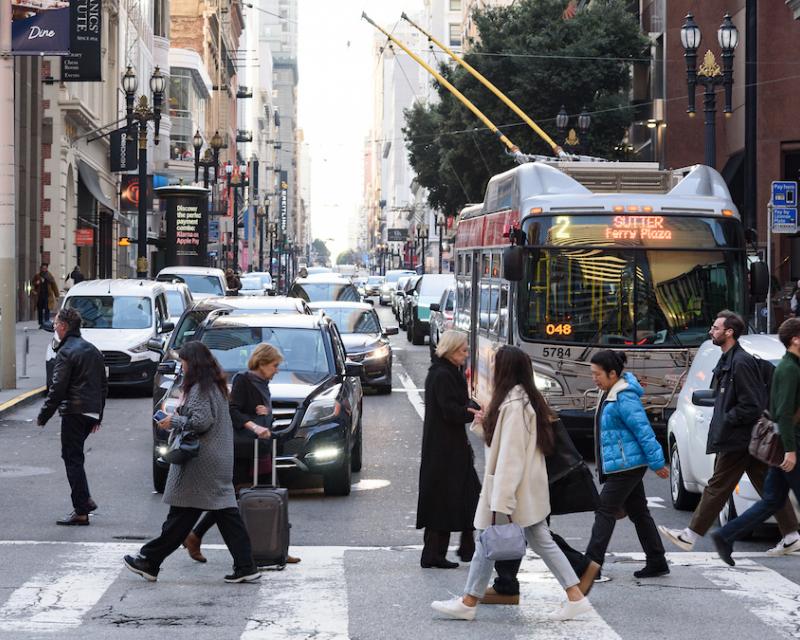
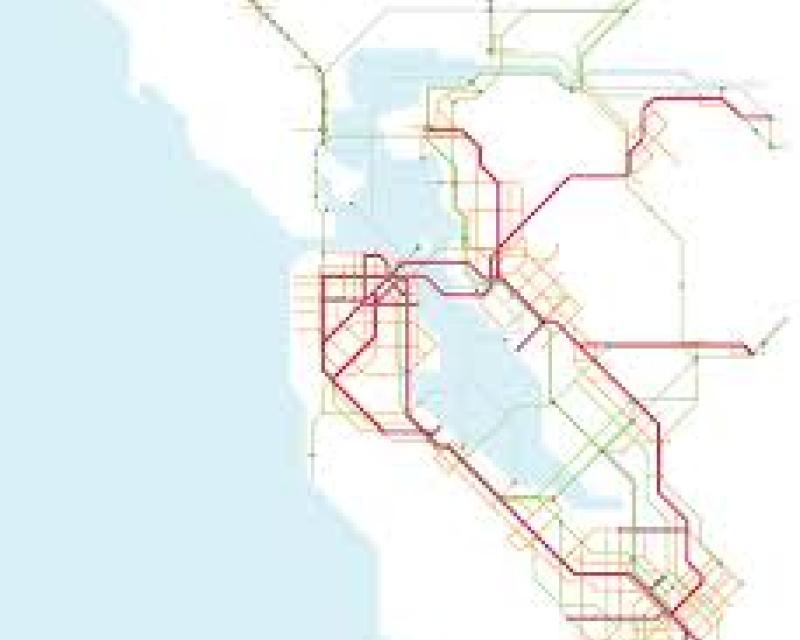
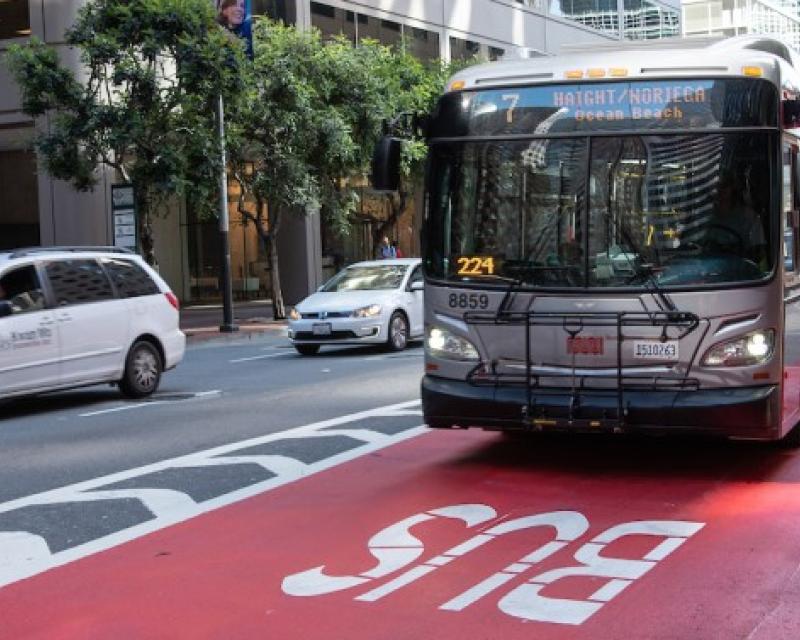
Muni is crucial to keeping San Francisco moving, whether you take transit or not. It gets people to jobs, schools, doctor’s appointments and events, while making city streets safer and less congested. Muni is a critical piece of what San Francisco has to offer for people who work, live and visit here. A world class city needs a world class transit system. Since the pandemic, Muni has lost a significant amount of funding, leading to a large funding gap.
Accessible version of Revenue Trends Post-COVID
Federal relief funding and other revenue sources have expired. Without additional funding, the SFMTA will be faced with an annual budget shortfall of about $350 million starting in July 2027. We will be forced to make significant cuts to Muni services and programs beginning in FY 27-28.
This could include:
- Corridors with multiple routes and downtown express buses, including: 2 Sutter, 6 Hayes/Parnassus, 15 Bayview Hunters Point Express, 27 Bryant, 31 Balboa, 1X California Express, and 30X Marina Express.
- Hilltop and neighborhood connections, including: 18 46th Avenue, 23 Monterey, 33 Ashbury/18th Street, 35 Eureka, 36 Teresita, 37 Corbett, 39 Coit, 55 Dogpatch, 56 Rutland, 57 Parkmerced, 58 Lake Merced, 66 Quintara, and 67 Bernal Heights.
Customers would also see doubled wait times on other Muni lines, which could include:
- Metro train service: J Chruch, K Ingleside, L Taraval, M Ocean View, N Judah, and T Third Street
- Rapid service: 5R Fulton Rapid, 9R San Bruno Rapid, 14R Mission Rapid, 28R 19th Avenue Rapid, and 38R Geary Rapid
- Frequent routes: 1 California, 5 Fulton, 8 Bayshore, 9 San Bruno, 14 Mission, 22 Fillmore, 24 Divisadero, 28 19th Avenue, 29 Sunset, 30 Stockton, 38 Geary, and 49 Van Ness/Mission.
We know that cuts this drastic would affect the daily lives of thousands of people – seniors, students, workers and families who rely on Muni. That’s why we want to be transparent about the risks to your ride and the potential solutions we are considering.
In order to close our deficit, to maintain programs and grow Muni service in the future, our financial situation will require multiple sources of new funding.
Continued cost-savings by the SFMTA and two new sources of funding would be used to balance the SFMTA’s budget.
1. Our role: Continued cost-savings
At the SFMTA, we will continue to do everything we can to reduce costs and drive efficiencies. Here’s a snapshot of our progress:
- $120M/year personnel savings through a hiring freeze, consolidating functions and reducing management
- $7M saved through summer 2025 service adjustments, but no route eliminations
- $10M annual savings starting FY25 thanks to transit priority and reliability upgrades
2. Regional measure: Connect Bay Area Act
In November 2026, voters will have the opportunity to consider a sales tax increase to fund BART, Muni, Caltrain and other regional transit systems.
Formerly known as Senate Bill 63, this measure will raise around $1B annually for transit agencies in the region. Of this, Muni would receive about $155M every year.
3. Local measure
In November 2026, voters will also have the opportunity to consider a local parcel tax that would generate more funding for Muni. If passed by voters, the measure will generate ~$150M annually to reduce the deficit and ~$10M to make marginal service quality improvements.
Here's how to stay informed and participate as we work to bridge our budget gap:
- Sign up for alerts about our budget
- Talk to us about our budget at upcoming events
- Share this webpage with friends and family who rely on Muni
- Spread the word on social – help more people understand our budget situation