
In response to community concerns about seeing riders not paying their fares, the SFMTA launched a series of efforts, known as the Fare Share campaign, to remind Muni riders of the importance of paying their fares for every trip on buses and Muni Metro. This multi-faceted campaign reminds the ridership and the public about paying fares by:
- Highlighting the many ways to pay and that paying your fare is easier than ever with Tap-to-Pay
- Describing our Proof-of-Payment (POP) program and the work that our Fare Inspectors do daily to improve the rider experience
- Demonstrating that paying for every ride as you board any Muni vehicle is important
Fares for Our Future
To build on this previous work, we are recommitting our efforts to address fare evasion and continuing to rebuild public trust that we are doing all in our power to get a handle on it. This new effort, Fares for our Future, will highlight our work around fare payment innovations to create a culture of tapping among our ridership. These changes should bring riders’ perceptions of others not tagging the farebox more in line with the true level of fare evasion. Put another way, the SFMTA has scheduled changes to how our Lifeline customers and SFMTA employees ride that requires them to tag. As always, our goal is to decrease the overall number of riders skipping their fare outright.
As we work this year to stabilize our operating budget, addressing any lost transit fare revenue becomes increasingly important. Your fare revenue is essential to maintain the service we provide. Toward the end of 2025, we observed better-than-expected gains in transit fare revenue. We've received more than $14M in fare revenue above what we budgeted. This is in part because of the daily work of our POP team, but also due to increased ridership that is paying full — or close to full — fares.
This year, riders gave Muni its highest satisfaction rating ever (78% excellent/good). For the most part, riders are not skipping fares because of poor service. Interestingly, riders who do not pay their fares view it as a small infraction and do not perceive the larger impacts to running Muni service. They also admit to thinking the chances of being inspected were minimal.
Given Muni's near-term budget deficit, bringing down the level of fare evasion and boosting transit fare revenue remains one of the SFMTA's top priorities. Fares are a significant portion of our overall budget. Not paying them hampers our ability to function in critical ways.
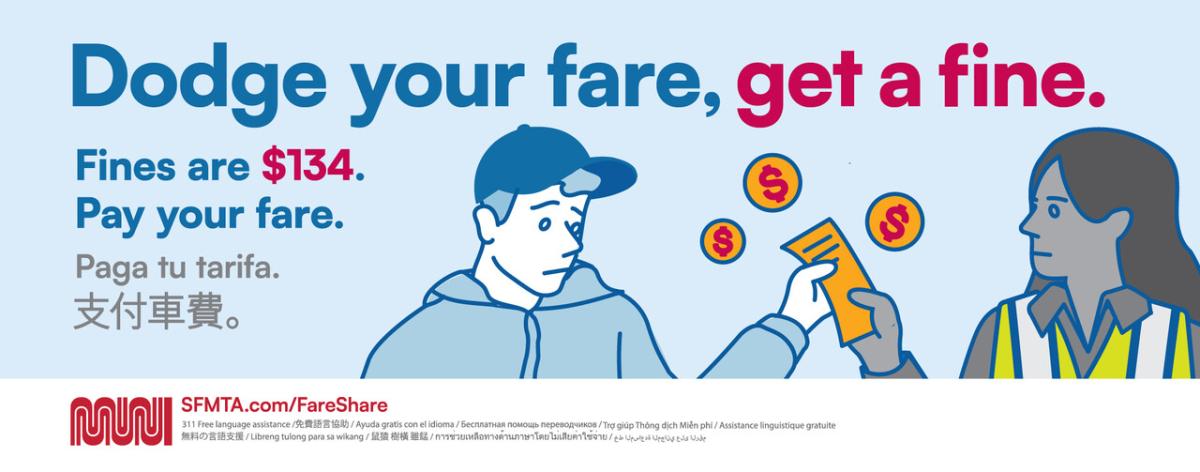
Growing the Fare Inspector Team
Beginning in April 2024, the SFMTA Board of Directors prioritized growing the Transit Fare Inspector team as part of our two-year budget for Fiscal Year (FY) 24-25 and FY 25-26. In the most recent budget, we've continued this investment in this program. We are committed to hiring up to the maximum allocated positions. As we continue to hire, fare inspectors will be more visible throughout the system. In September 2024, the number of inspections doubled since the same period in 2023, a major milestone for our new Fare Compliance efforts. Our goal is to keep increasing the number of inspections into the foreseeable future. For riders, they should expect to see fare inspectors while riding Muni and be prepared to show their proof-of-payment.
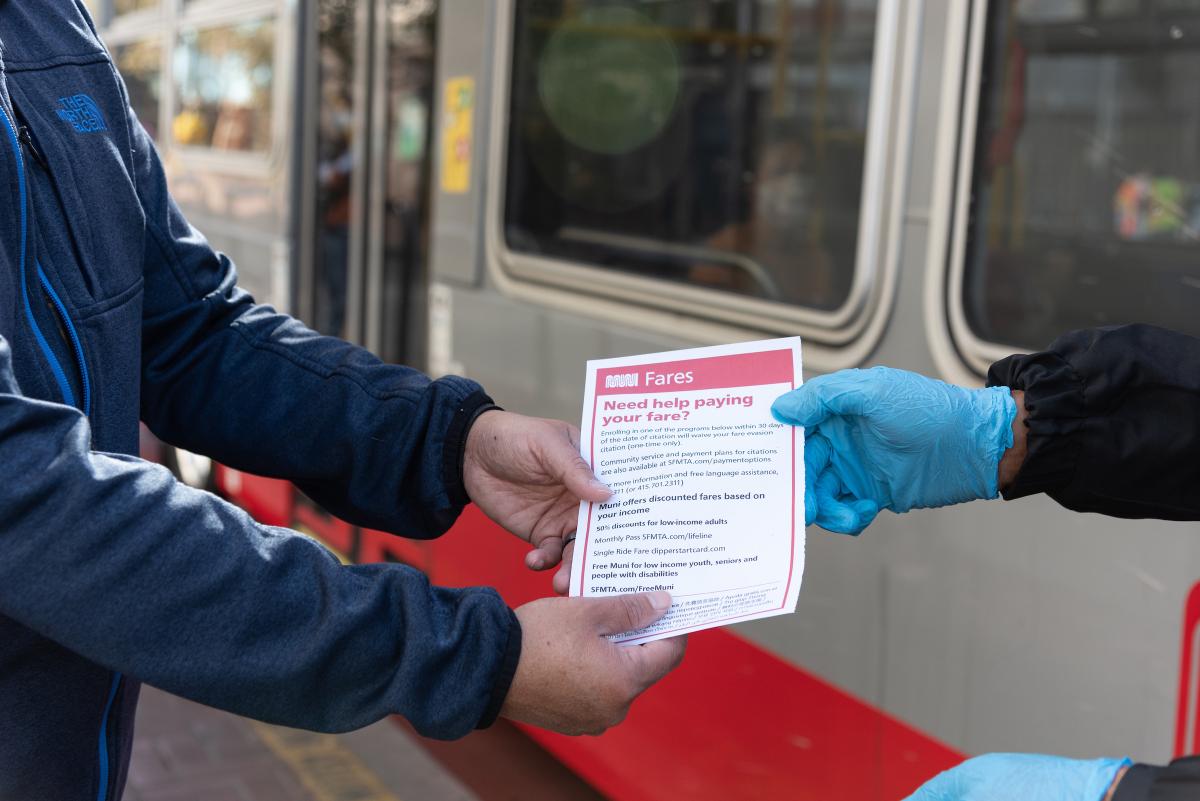
Fare inspectors are trained to educate riders about our free and reduced fare programs. If a rider is found non-compliant, inspectors provide a handout about Muni's free and reduced fare programs like Clipper START, Lifeline and Access Pass programs. This handout highlights another very important point: that enrolling in a free and reduced fare program is a way to have your citation dismissed.
Additionally, our Inspectors are trained in de-escalation techniques. They use this training to address difficult, tense situations. They also work closely with other teams to make Muni safe systemwide.
Fare inspectors are good people with a tough job. They are here to ensure the system runs smoothly and to improve the rider experience. To get a better sense of a Day in the Life of a Fare Inspector and why they love what they do, check out the videos above.
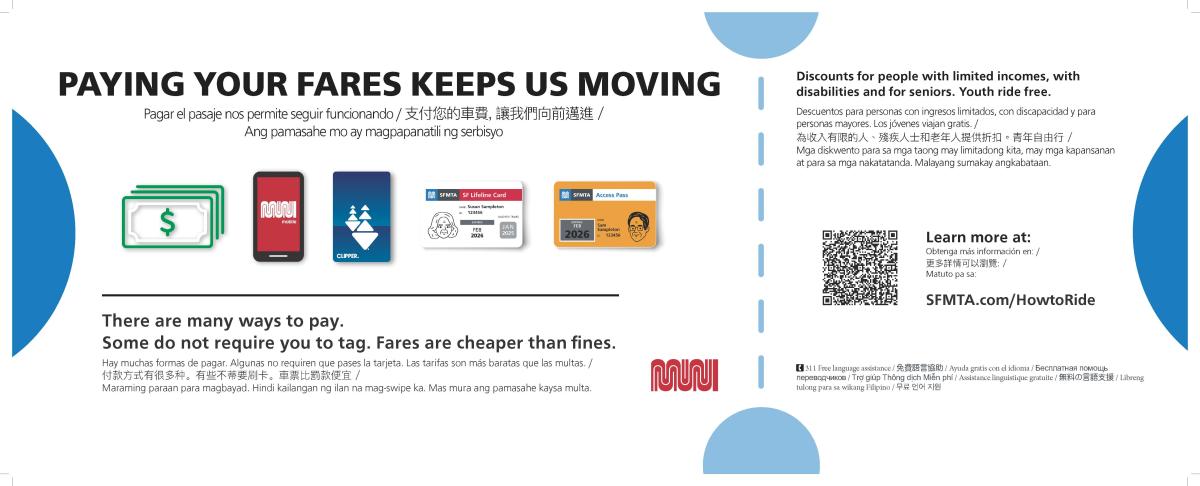
Paying Your Fares Keeps Us Moving
The Fare Share campaign is designed to assist and amplify the work of the fare inspector team. Informational cards (like the one above) were installed on buses and Muni Metro in 2024. These cards show some of the more popular ways to pay fares. They reinforced the message that not all forms of payment require tagging a fare box. We needed to communicate that perceived fare evasion is higher than the actual count. Again, our estimates based off our inspections and citations show most riders pay their fares. As an Agency, we are constantly exploring other methods of getting accurate data to better understand the depth of the issue and to help guide the work of our Fare Inspector team.
On our social media, we featured videos explaining our fares system. In the videos, we stress that riders need to prepare for their ride and that being prepared means having your fare ready. Figuring out which form of fare payment you use before you ride is an important part of trip planning.
Our How to Ride Muni: The Quick Start Guide is a great resource to help riders, new or experienced, plan for their Muni ride.
How to Avoid Muni and Parking Tickets
Riding Muni or driving in San Francisco? We have also been asking community members what kind of information they need to ride Muni or park in the city. Many people want to know:
- "How do I pay for Muni?"
- “What’s the best way to avoid a Muni or parking ticket?”
- “What can I do if I get a ticket?”
This short video breaks down what you need to know about paying your Muni fare, how to avoid Muni and parking tickets, and how to get help if you’re low on funds.
To watch in Spanish or Chinese, click the below links:
Key things to know:
- Before you ride Muni
- Make sure your Clipper card has funds. Prepare your fare.
- Note: If you need a little help to pay your fare, see our Fares webpage for a list of discounted and free Muni programs.
- Your fare covers two hours of travel on Muni buses and trains.
- As you board Muni
- If paying with a Clipper card, scan it correctly. It should only beep once.
- If you use one of our passes, have it handy.
- If you use the MuniMobile app, activate your payment.
- If using cash, have the exact amount ready to pay at the front of the vehicle.
- Don't wait to pay your fare. If an inspector sees you pay after they board, you will receive a citation for 'Payment Upon Inspection'.
- Before you park
- Check street signs and curb colors to avoid parking tickets.
- For tips on what each curb color means, see our Color Curbs webpage.
- For help with signs and general guidance, see our How to Park Legally webpage.
Free and Reduced Fare Programs
In addition to the above efforts, we continue to work with community partners to raise awareness about our free and reduced fare programs. Those who qualify for these programs should get the benefits they need. The Lifeline and Access Passes are Muni's monthly passes for people with low or no incomes. The Clipper START program provides a single-ride discount for people for those with low incomes, without needing to buy a monthly pass. It is also perfect for people that use regional transit agencies to get to their destination. Clipper START provides discounts to BART, AC Transit, and everywhere the Clipper card is used to pay fares. Important to note: if a rider qualifies and applies for Lifeline, Access or Clipper START within 30 days of receiving a transit citation, they can have the citation dismissed. Visit SFMTA.com/fares for detailed information on all of Muni's fares and how to apply for discount programs.
Our interest in addressing fare evasion is focused on riders that have the ability to pay; not to punish riders who cannot. There is daily evidence of community members enrolling in these programs in order to have their citation dismissed.
What to Do if You Get a Muni or Parking Ticket
Got a Muni or parking ticket in San Francisco? Check out this video to learn about what you can do. You have options, if you cannot afford to pay your ticket. The SFMTA is here to help.
To watch in Spanish or Chinese, click the below links:
Key tips we share:
- Deadline: You have 21 days to protest a ticket.
- Payment: Explore easy ways to pay on our Pay a Parking Ticket or Transit Citation webpage. You can pay by phone, online, mail or in person.
- Other options: You can apply for a monthly payment plan or complete community service hours if you can’t pay right away. See our Citation Payment Options webpage for details.
Fiscal Challenges
The SFMTA is facing serious fiscal challenges. Federal and state relief funds are ending in July 2026. We are working to bridge this gap, maintain current service, and create a stronger future for Muni with a regional and a local revenue measure. One part of the solution is to ensure that riders pay their fare on every trip. Fare payment is an essential part of keeping Muni moving. Paying the fare is a requirement, but it's more than that. When riders pay their fare, they support Muni service. The fare represents your part to keep the system running.
According to our 2025 survey, rider satisfaction is at an all-time high. Riders are not avoiding fares because they view Muni service as inadequate, and this is a good thing. It means with the right combination of actions and message, we can succeed in bringing down the rate of fare evasion. When asked specifically about avoiding fare payments, riders were generally unaware of the consequences of the action. With the upcoming deficits, addressing fare evasion is critical to reducing financial losses in fare revenue.
Continue to check out this page for updates on the SFMTA's Fare Compliance efforts.